An attempt at exhausting a road in Karachi | Filmed from a footbridge in 2023
Research Focuses
Infrastructure
Mobilities
More-than-human geography
My research takes urban roads as the primary frame to examine the politics of infrastructure and inhabitation in Karachi, Pakistan. It contributes to and brings together scholarship on infrastructure, inhabitation, and more-than-human geography.
Accordingly, it attends to the liminal forms of human and non-human inhabitations that are sutured in relation to roads and ones that are violently unmade in order to further roads. It focuses on the governance practices and lived realities that produce roads as sites of tensions and encounters shaped by social categories of class and gender.
Through careful ethnography, it offers ways of conceptualising how infrastructure, urban governance, and everyday improvisations for humans and non-humans constitute the urban, in all its conflictual and convivial forms.
Asphalt City:
Roads and the Politics of Inhabitation in Urban Pakistan
PhD project (completion in March 2026)
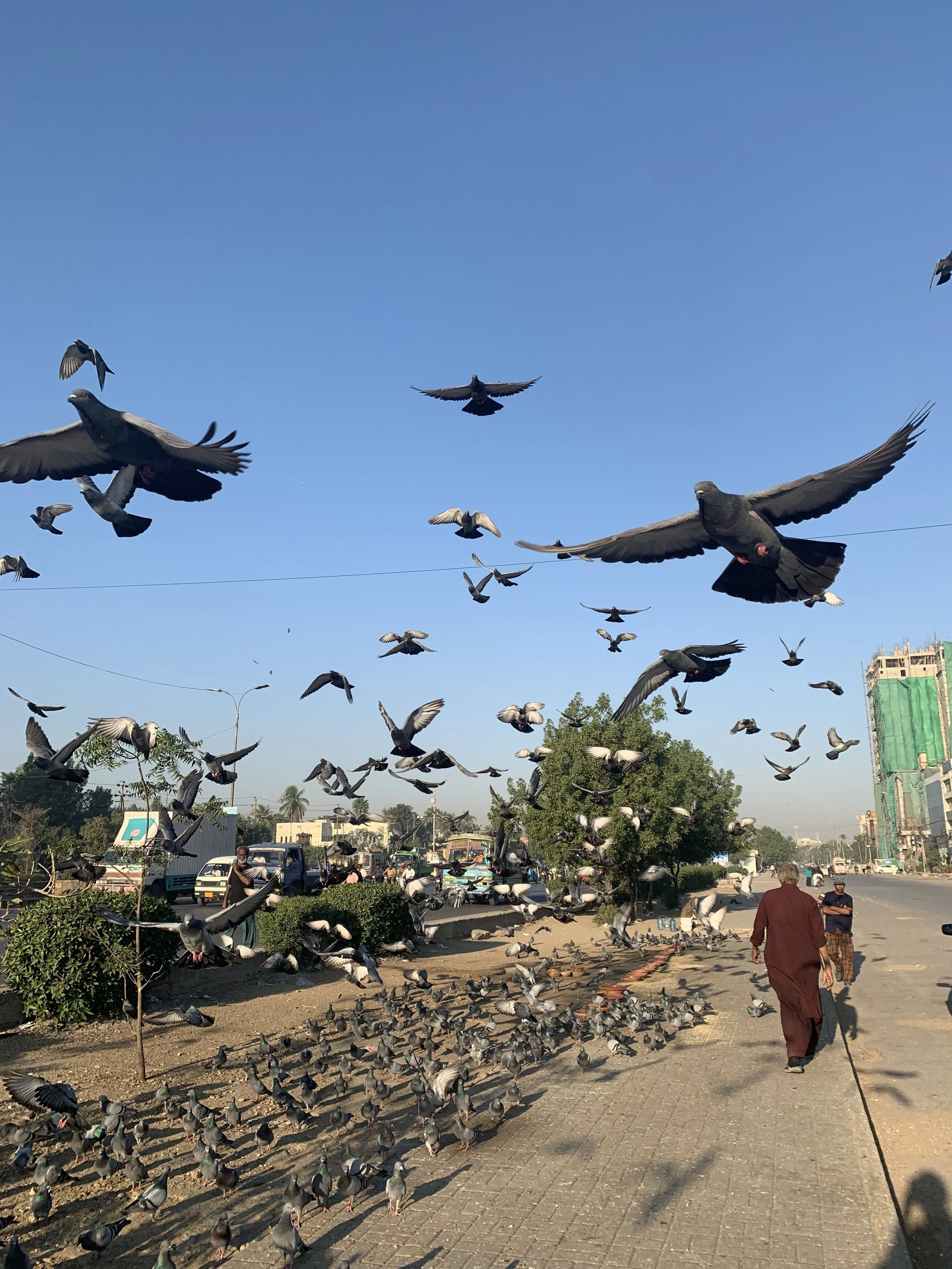
Pigeon-human relations
My reseach brings into view practices of cohabiting urban gaps, crevices, and liminal spaces with animals in cities through an empirical focus on roadside spaces in Karachi. It highlights interstitial ecologies as interconnected processes and practices in the making of human and non-human cohabitation in in-between spaces.
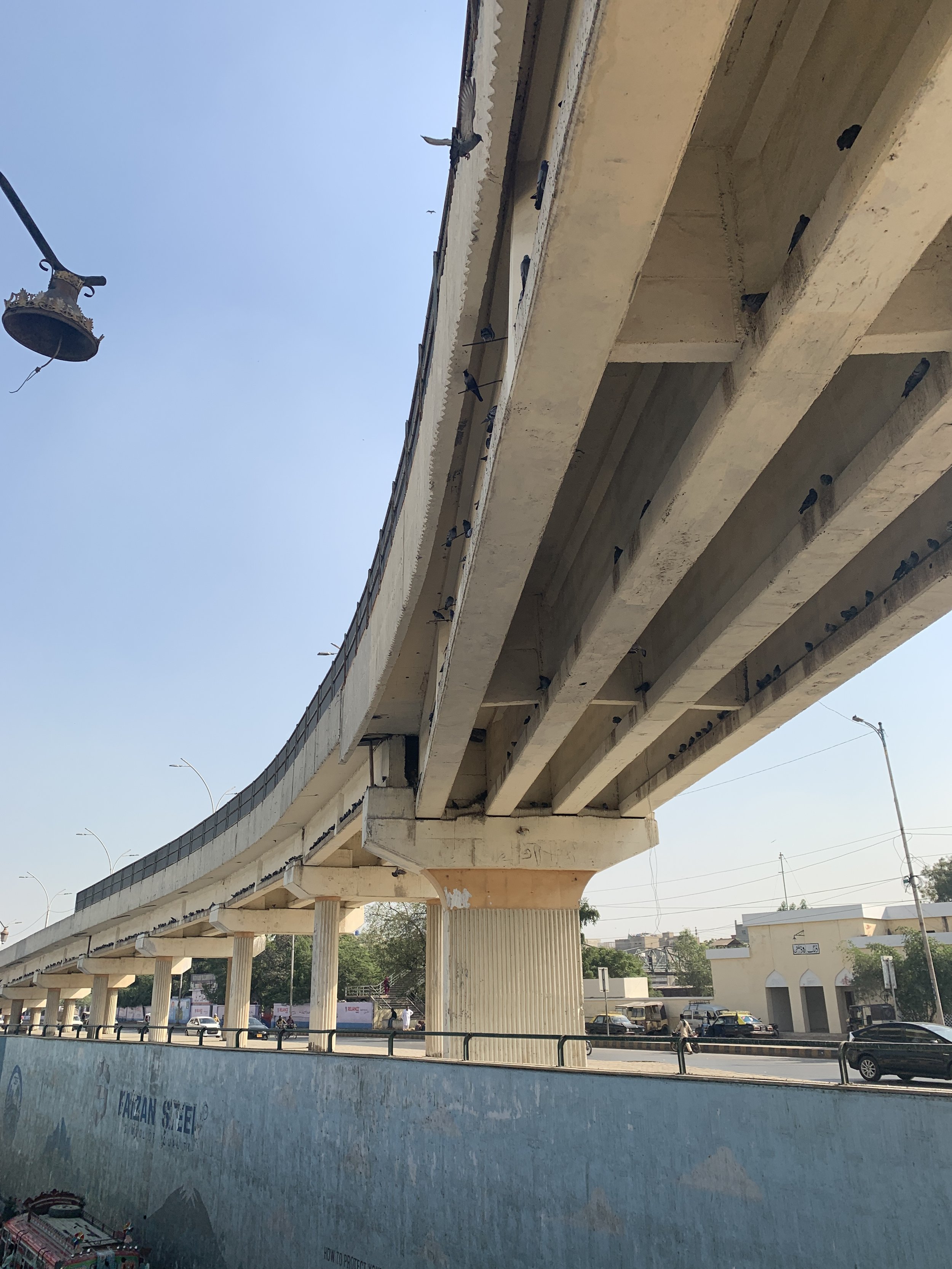
Flyover geographies
Focusing on the afterlives of flyovers in the city of Karachi, my research situates the flyover, its material form, and attendant gaps, characterized by raised ribbons of “smooth” flows, leftover spaces, and proliferation of informal practices, as important sites of encounters in the city that shape practices of inhabiting urban space. Read more here.
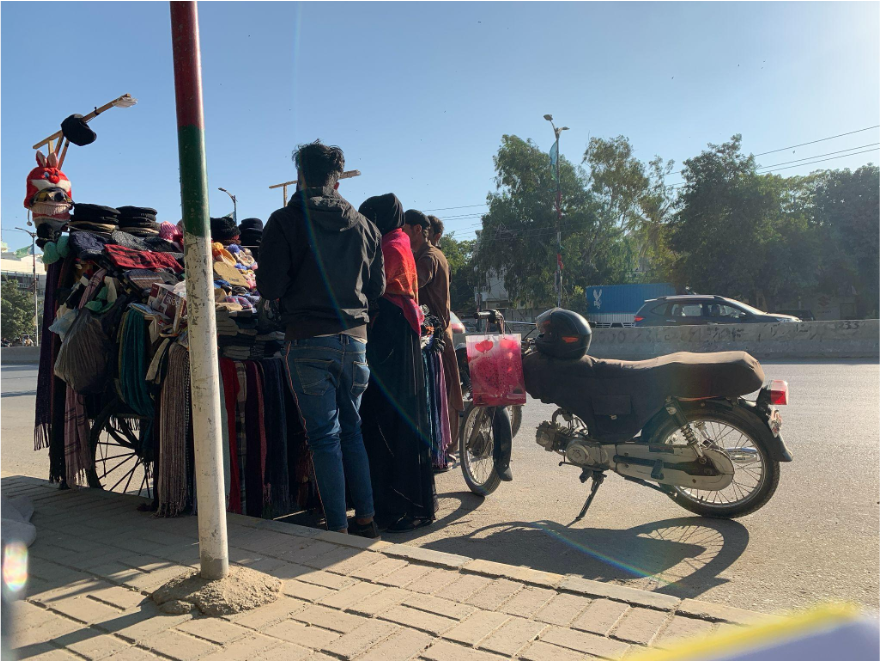
Street vending
Drawing on ethnographic research in, and an epistemic friendship across, Karachi, Pakistan and Mumbai, India, this research traces the materiality of vending practices as they unfold across modalities of inhabitation. Thinking with STS scholarship and Southern urbanism, it argues for a renewed focus on materialising street vending and demonstrates that street vending constitutes a crucial form of city-making in the South. Read more here.
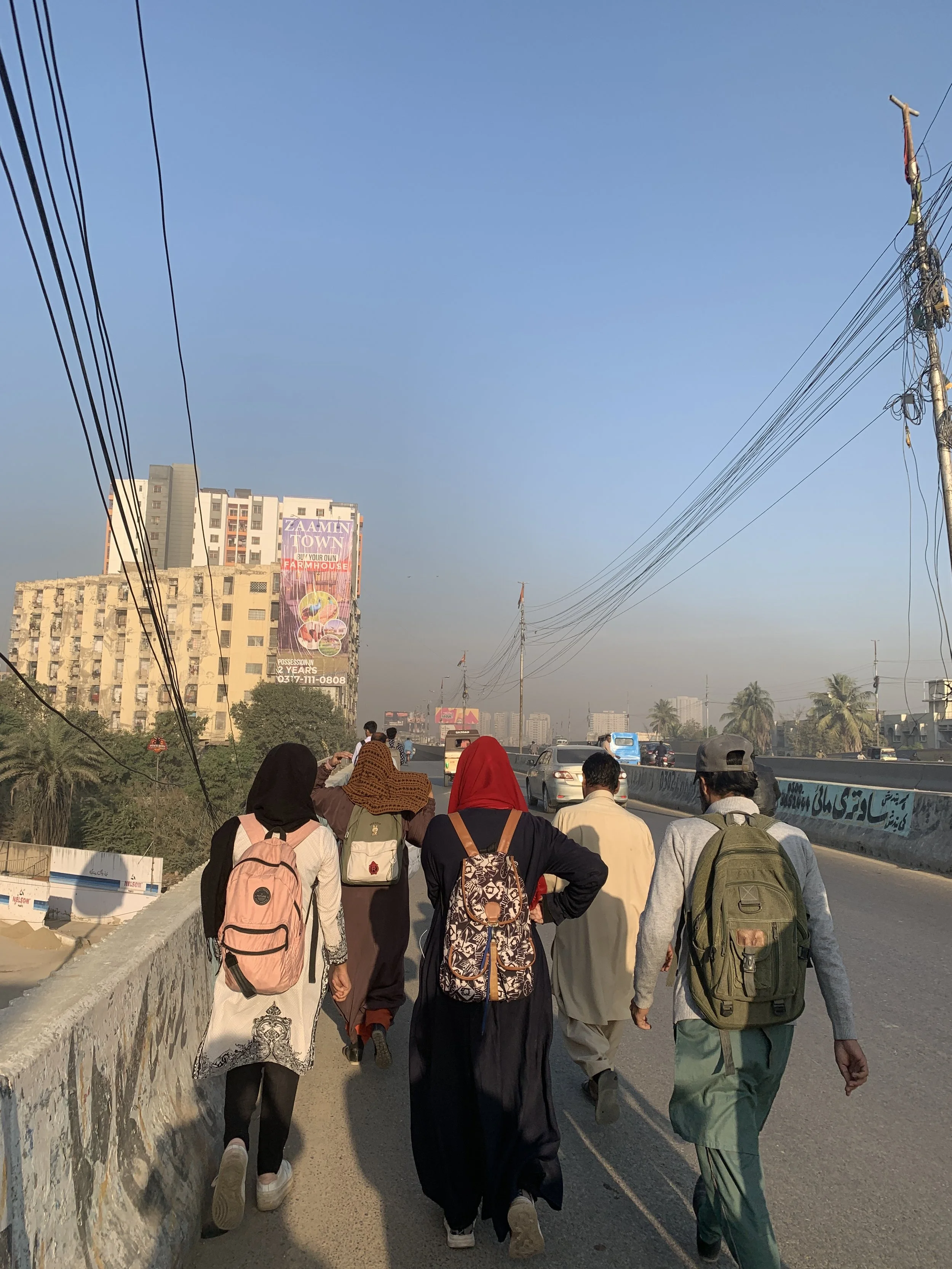
Urban walking
My research traces everyday pedestrian experiences in Karachi and foregrounds forms of wayward mobilities: embodied practices that unsettle the disciplining logics of infrastructure and reveal the uneven negotiations through which urban dwelling is made possible.